
Article · preparation
Keep Your Quit Plan Usable When Early Momentum Fades
by Thomas Brennan · · 6 min read
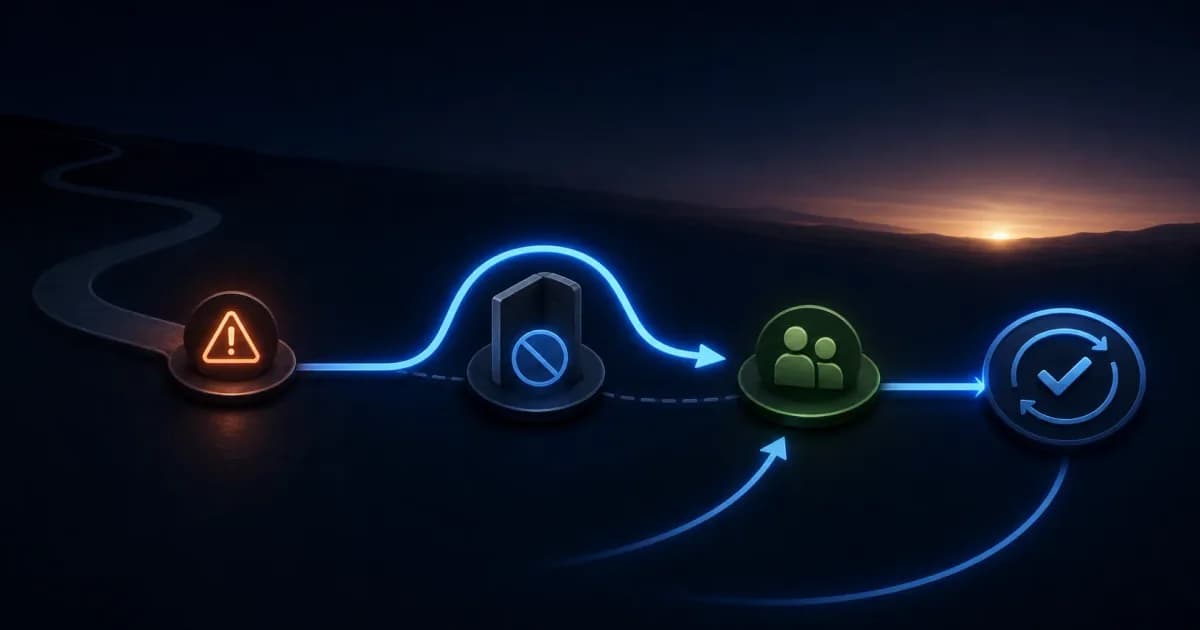
A quit plan stays useful when it tells you what to do in the next difficult situation, even after the excitement of starting fades. Identify one trigger, remove one easy access route, give one person a specific support job, and write what you will change after the next test.
Starting can feel clear because you have made a decision. Later, an ordinary evening, familiar place, or difficult feeling can make the old action feel close again. That does not prove that you failed. It tells you which situation needs a better plan.
Skip the myth that one calendar fits every person or habit. Your job is to prepare the next situation you can recognize.
Audit the plan before you add more rules
Audit the quit plan with this four-part check:
| Question | Useful answer | Answer that needs another pass |
|---|---|---|
| What situation am I preparing for? | “The hour after work when I pass the shop.” | “Whenever I feel bad.” |
| What access route can I change? | “I will take another route and leave my card at home.” | “I will try harder.” |
| What will I do instead? | “I will call Maya while I walk home.” | “I will distract myself somehow.” |
| Who can help, and how? | “Maya will answer between 6 and 7 p.m.” | “My friends will keep me accountable.” |
The weaker answers hide the actor or action. Rewrite them until you can see who does what. You do not need a larger plan; you need one you can carry out.
Write the plan as an action
Write the quit plan as an observable action:
When [situation] happens, I will [action]. If I need more help, I will contact [person or service].
Examples:
- When I finish work, I will take a different route home.
- When the betting notification appears, I will close the account and call the person who knows my plan.
- When I take my phone toward bed, I will put it on the kitchen charger.
- When I want to buy on impulse, I will close checkout and write down what I wanted.
According to the Smokefree guidance on vaping triggers, people can identify the people, places, emotions, and routines connected with vaping, then plan how to handle them. Use that structure for your own behavior without assuming that one substance or behavior follows another's medical course.
The Smokefree cravings overview reports that readers can understand their triggers and make a plan. This guide borrows that planning boundary. It does not assume that vaping, alcohol, gambling, shopping, eating, or phone use follow the same pattern.
Remove one easy path
Remove one easy access path in the next environment you will enter. Move the object, saved payment method, shortcut, notification, or charger that lets the old action happen without a pause.
Then put the replacement in reach. Set out water, walking shoes, a book, a support number, or the message you want to send. You are not trying to make every future decision today. You are changing the next one.
Match the barrier to the access route
Match the barrier to the access route you actually use:
| Access route | Concrete step | Limit of this step |
|---|---|---|
| Object in reach | Move or remove it before the risky time | Provide clinical care |
| Saved payment method | Remove it and sign out | Resolve debt or compulsive spending alone |
| Betting app alert | Disable the alert and use account controls | Replace gambling treatment or financial advice |
| Phone beside the bed | Charge it elsewhere and place another alarm | Diagnose a sleep problem |
| Familiar route or stop | Choose another route and tell your support person | Control whether an urge appears |
However, a barrier can create its own cost. A blocker password held by someone else changes your control of the account. A route change may not work with disability, childcare, or work. Choose a change you can reverse and explain, unless a qualified professional helps you build a different safety plan.
Tell someone what help looks like
Tell your support person what useful help looks like. “Keep me accountable” can mean anything, so give the person a specific job:
- Answer when I call after work.
- Do not offer me a vape or drink.
- Hold the blocker password.
- Sit with me while I contact a gambling support service.
- Help me contact my clinician if I feel unsafe.
The right person can support your plan without becoming your clinician. If stopping a substance could cause dangerous withdrawal, talk to a healthcare professional before you stop abruptly.
If alcohol dependence may apply, get medical advice before you stop or sharply reduce drinking. The NHS alcohol-use disorder page warns that a person with alcohol dependence can risk harm by stopping suddenly and should seek medical advice first. The SAMHSA support directory reports that people in the United States can use it to look for mental-health or substance-use care. Use local clinical and emergency services where you live.
According to the National Problem Gambling Helpline, people in the United States can use the service to find local resources. A friend can sit beside you while you make contact, but they should not carry the whole safety plan.
Shorten the review
Shorten the review when the plan breaks. Write only what you can use:
- The trigger was…
- Access stayed easy because…
- I will change…
- I will ask…
Do not write a prosecution. Write the next version of the plan.
Use a seven-line repair record
Keep the seven-line repair record inspectable:
- Date and situation: Where was I, and what had just happened?
- Action I planned: What did I intend to do?
- Access route: What made the old action easy?
- Action I took: What did I actually do next?
- Support: Who did I contact, if anyone?
- Safety question: Do I need qualified or urgent help?
- One revision: What will I change before the same situation returns?
Date and situation:
Action I planned:
Access route:
Action I took:
Support I contacted:
Safety question:
One revision before the next trigger:
Do not manufacture precision. You can write “I do not know” for a trigger, duration, or effect. The record exists so you can compare events and bring clear observations to a professional when needed; it does not diagnose you.
Decide whether to keep, simplify, or replace the plan
Keep the plan when you can perform its actions and the setup still matches your life. Simplify it when too many steps prevent you from starting. Replace it when the plan conflicts with safety, professional guidance, or circumstances you cannot change.
Ask these questions:
- Can I perform the first action in the place where I need it?
- Did I name the person who will help and the job I want them to do?
- Did I remove one access route before the risky time?
- Did I preserve an emergency or clinical path when the situation can become unsafe?
- Can I review the result without hiding a slip or inventing a success?
If the answer stays no, change the plan instead of adding shame.
Put the repair plan into LastPuff: Stop Vaping
LastPuff: Stop Vaping gives your vaping plan a focused place. Choose the triggers you recognize, save your reason, open SOS when an urge hits, and review the check-ins you record. LastPuff: Stop Vaping does not diagnose addiction, assess withdrawal risk, or provide treatment.
Read the full preparation guide, use the craving response plan, or open LastPuff: Stop Vaping to record the next trigger you prepare for.
Choose your app
Find the app for the habit you want to change.
Save your reason, choose your triggers, open SOS when you want to vape, and review the check-ins you record.