Article · habits
How to Quit Soda: Build a Trigger and Replacement Plan
by Clean Break Editorial Team · · 10 min read
To quit soda, decide whether you will stop or reduce, identify the situations that trigger it, make your replacement easier to reach, and plan what you will do after a lapse. You need a specific routine, not a promise to “have more willpower.”
This guide covers behavior and planning. It does not diagnose dependence, prescribe a diet, or replace medical advice. Soda can contain sugar, caffeine, both, or neither. Read the label on what you actually drink, and talk with a qualified clinician when a health condition, pregnancy, medication, eating concern, or significant caffeine use changes the decision.
Measure the pattern before changing it
For three ordinary days, record:
- what you drank;
- the approximate amount;
- the time and place;
- what happened immediately before it;
- whether you wanted sweetness, caffeine, carbonation, cold temperature, convenience, or a break.
Do not use the log to shame yourself. Use it to find the job soda performs.
“I drink too much soda” hides the pattern. “I buy a large cola when I stop for fuel after work because I am tired and thirsty” gives you a location, time, access point, and replacement need.
Choose stop or reduce
You have two practical starting routes:
| Route | What you decide | When it may feel clearer |
|---|---|---|
| Stop on a chosen date | Your last planned soda, replacement drinks, access changes, and lapse response | When exceptions keep expanding or a clean boundary feels easier to follow |
| Reduce in measured steps | Which serving changes, how often, and when you review the next step | When caffeine, routine, or a large current intake makes a staged plan more workable |
“Drink less” is not a measurable step. “Replace the weekday lunch soda with cold sparkling water for seven days, then review” is.
If your usual soda contains caffeine, a sudden change can feel different from changing a caffeine-free drink. Ask a clinician or pharmacist for individual guidance if you have concerns about headaches, pregnancy, medication interactions, sleep, or your current caffeine use.
Match the replacement to the trigger
The strongest replacement solves the same immediate job without pretending every drink is equivalent.
| Trigger or job | Replacement to prepare |
|---|---|
| Thirst | Cold water already within reach |
| Carbonation | Unsweetened sparkling water, if it suits you |
| Sweet taste | A drink or food choice that fits your own nutrition guidance |
| Caffeine | A planned caffeine option and amount that fits qualified guidance |
| Drive-through routine | Bring a drink before the journey and change the ordering script |
| Work break | Keep the break, change the drink |
| Meal pairing | Choose the replacement before you sit down |
The CDC guide to water and healthier drinks explains that water helps prevent dehydration and that replacing sugary drinks with water can reduce calorie intake. That public guidance does not decide the right drink for every person or health condition.
Keep the function visible. If soda marks a break, replacing it with water while deleting the break may leave the real need untouched.
Change access before the craving
Make the chosen action easier while your plan feels obvious:
- Remove stored soda you do not intend to use.
- Cancel automatic deliveries or recurring cart items.
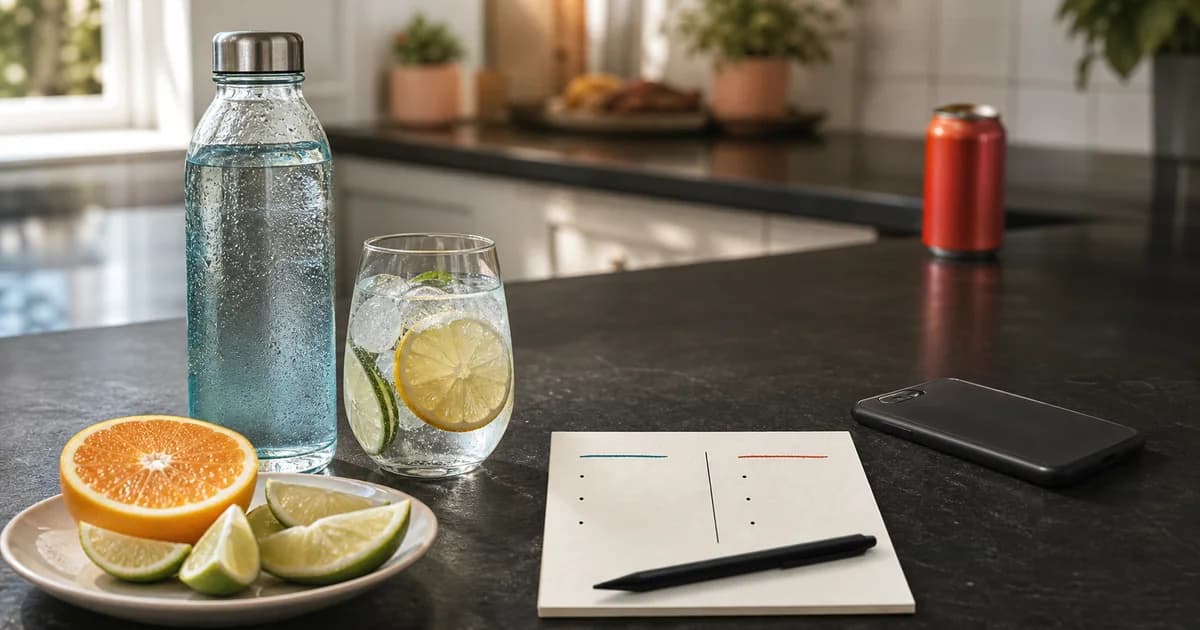
- Put the replacement cold and visible.
- Carry a drink through the time and place that usually triggers a purchase.
- Decide your restaurant order before you arrive.
Access changes do not guarantee an outcome. They remove repeated decisions from a routine that already runs quickly.
Write a response for your strongest moments
Use an if-then plan:
If I stop for fuel after work,
then I will drink the water I brought before I enter the shop.

If I still want soda after ten minutes,
then I will decide from my written stop-or-reduce rule instead of improvising.
Build three versions for your actual triggers. Keep them short enough to remember.
Clean Break lets people select triggers during setup and provides an SOS flow from the Today screen. Use those features as a prompt for your plan, not as treatment or a guarantee that an urge will disappear.
Handle restaurants, travel, and social plans
Prepare one sentence that does not invite a debate:
- “Water for me, please.”
- “I’m skipping soda today.”
- “I already brought a drink.”
- “I’m following a reduction plan, so I’ll have the smaller size.”
You do not need to defend the decision. You also do not need to claim that soda is universally forbidden. State what you chose for this plan.
Travel needs a supply check. Find water, a bottle refill point, or your planned alternative before the usual purchase moment. Convenience is often the whole trigger.
Treat a lapse as data
If you drink soda outside the plan, record four facts:
- Where were you?
- What happened before the choice?
- Which replacement or boundary was missing?
- What will you change before the same situation returns?
Do not compensate with food restriction, extra exercise, skipped sleep, or a harsher rule. Restart with the next specific decision.
Clean Break shows a progress area called Journey. A useful journey keeps the difficult day visible and helps you revise the plan instead of inventing a perfect record.
Copy this quit-soda plan
My reason for changing soda:

I will stop / reduce by:

My three strongest triggers:
1.
2.
3.

The job soda performs in each situation:

My prepared replacement:

The access changes I will make today:

My caffeine question for a clinician or pharmacist, if needed:

If I drink soda outside the plan, my next action is:
Choose the first change you can set up today. Then review the real pattern after a week instead of grading yourself after one afternoon.
Choose your app
Find the app for the habit you want to change.
Save your reason, choose your triggers, open SOS when an urge hits, and review your check-ins. Join the waitlist and we'll send one email when the app launches.