Article · cravings
Find Your Habit Triggers Before They Find You
by Clean Break Editorial Team · · 9 min read
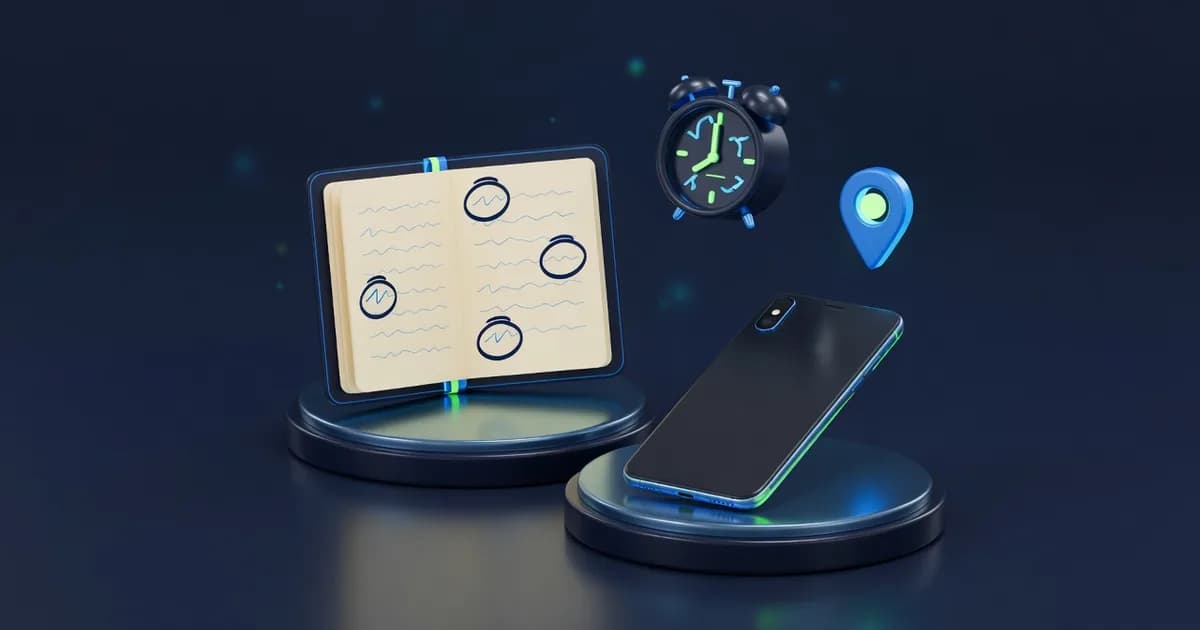
You do not reach for your habit at random. You reach for it after specific moments: the third coffee, the argument, the boring stretch of the commute, the first quiet minute after the kids sleep. Those moments are triggers, and you can map yours in about a week with a pen or a notes app. Once a trigger has a name, you can write a plan for it. While it stays invisible, it runs you.
This guide gives you the seven-day trigger log, the five trigger types to sort your entries into, and the if-then format that turns each trigger into a plan. It works for vaping, drinking, doomscrolling, impulse buying, and most other habits people bring to Clean Break. It is not medical care, and if your habit involves physical withdrawal or feels unsafe to change alone, bring a clinician into the plan first.
Why triggers beat willpower as a starting point
A habit is a learned loop: a cue, a behavior, and a payoff your brain files away for next time. Researchers describe habits as actions your environment launches automatically, which is why the behavior can start before the decision to do it ever arrives. The psychology review Making health habitual puts it plainly: once a behavior becomes habitual, it runs on context cues rather than intentions.
That is bad news for willpower, which shows up only after the loop has already started. It is good news for mapping, because context repeats. The same handful of moments launches most of your reps, and a seven-day log is usually enough to see the pattern. Tobacco-cessation programs have used this approach for decades; Smokefree.gov's trigger guide has people list their smoking moments before quit day for exactly this reason.
Run the seven-day trigger log
For one week, change nothing about the habit. Every time you do it, or badly want to, capture four things in under thirty seconds:
- Time: when it hit.
- Place: where you were.
- Company: who was around, including nobody.
- Feeling: the one-word state right before, like bored, stressed, tired, celebratory.
That is the whole log. Do not add columns, and do not judge the entries as you write them. A log that takes thirty seconds gets kept; a log that takes five minutes gets abandoned by Wednesday. If a craving passes without the behavior, log it anyway with a mark, because near-misses show the loop's edges. The anatomy of a craving explains what those spikes are doing internally while you watch them.
By day seven you will have somewhere between ten and fifty entries. Most people find their entries embarrassingly repetitive. That repetition is the finding.
Sort your entries into five trigger types
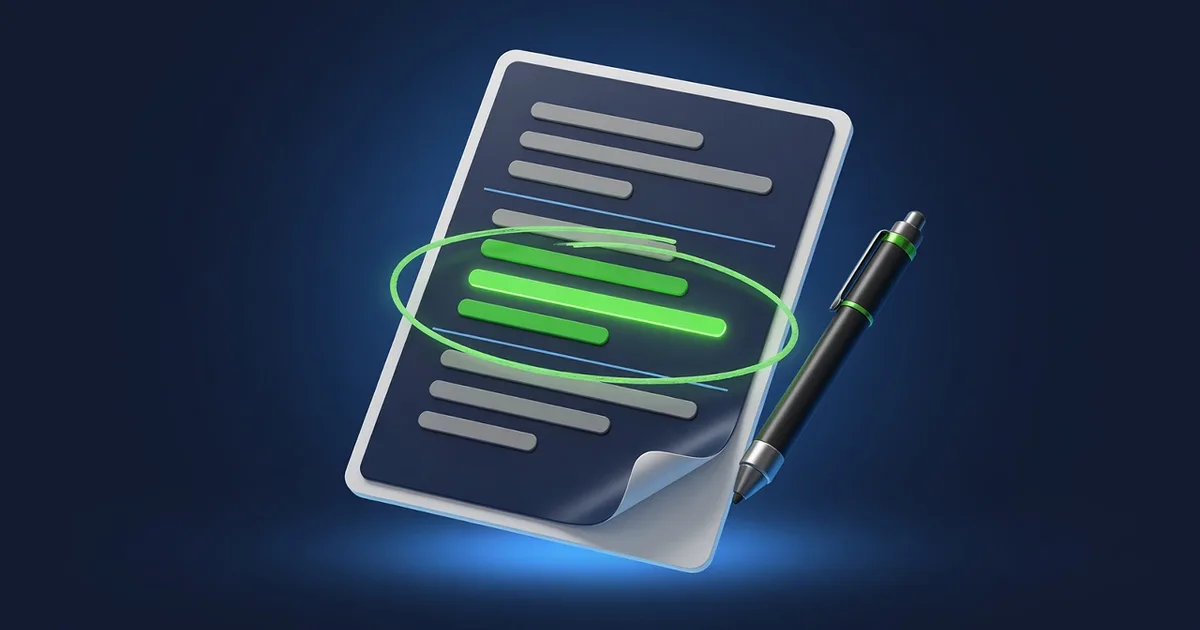
Read the log once and tag each entry with one of five types. The UNC Learning Center's guide to changing habits uses a similar decomposition: to change a habit, you first break it into the cues that run it.
Time triggers. The habit fires at a clock position: the 3pm slump, the after-dinner slot, the midnight scroll. Your log shows the same times circling back.
Place triggers. A location launches it: the car, the balcony, the couch corner, one specific store or app. The place is the cue, which is why the habit often stays home when you travel.
People triggers. Certain company makes the behavior feel automatic or expected: the friend you always drink with, the group chat that ends in a checkout page.
Feeling triggers. An internal state demands relief: stress, boredom, loneliness, anger, and also celebration. Feeling triggers are the strongest and the hardest to dodge, because you cannot schedule around your own emotions.
Preceding-action triggers. One behavior tows another: coffee then cigarette, closing the laptop then opening the fridge, getting into bed then opening the feed.
Count the tags. Two or three types will dominate, and the single most frequent entry in your log is your primary trigger. That one gets your best plan.
Write one if-then plan per repeating trigger
For every trigger that appeared three or more times, write one sentence in this exact shape: "If [trigger], then I will [specific action]."
The format matters more than it looks. Psychologists call these if-then sentences implementation intentions, and studies reviewed in Making health habitual found that linking a planned response to a concrete cue reliably outperforms a bare goal like "I'll cut down." You are using the habit's own mechanism, a cue that launches an action, and pointing it at a different action.
Good plans name a real replacement, not an absence:
- If I pour my after-dinner coffee, then I make tea and take it to the balcony instead of the couch.
- If my cart holds more than one item after 10pm, then I close the app and decide at breakfast.
- If I feel the boredom spike on the commute, then I start the podcast queued that morning.
- If Friday drinks land on the calendar, then I order my alcohol-free option first, before anyone else orders.
One plan per trigger, and only for triggers that actually repeat. Four strong sentences beat fifteen aspirational ones. And expect the plans to be tested early: the first days of a change are the roughest stretch, and the day-three wall covers why the wave peaks before it fades.
When the trigger fires anyway
A plan reduces reps; it does not make you trigger-proof. When a craving lands hard despite the plan, you need something to do inside the sixty seconds it owns you. Urge surfing is the standard technique: you watch the craving rise, peak, and fall without acting on it, and the practice itself weakens the loop. The NIH's habit guidance makes the same point from the research side: noticing your cues and swapping the routine works better than trying to hold the door shut with effort.
Feeling triggers deserve one extra honesty check. If your log shows the same feeling driving most entries, the habit is doing a job for you, and the replacement has to do that job too, at least partly. A breathing exercise can stand in for a stress cigarette; it cannot stand in for a lonely evening. Plan something that actually answers the feeling, and if the feeling itself is the problem, that is a conversation for a professional, not a tracker.
Put the map inside your quit plan
Clean Break is a family of ten focused iPhone apps, one per habit, and the setup flow has you select your triggers directly, so the map you built this week becomes part of the plan the app holds for you. When a trigger fires anyway, the SOS flow sits one tap from the Today screen and walks you through the moment instead of leaving you alone with it. Your progress collects in the Journey area, where the reps you did not do become something you can actually see.
Choose your app, pick the habit you are working on, and bring your trigger list to setup. The log took you a week. The plan it feeds can carry the rest of the year.
Frequently asked questions
What if my habit seems to have no pattern?
Log longer, and log the near-misses too. A habit with no time or place pattern usually has a feeling pattern, and feelings take more entries to surface. If two weeks of honest logging still shows nothing, log what happens right before the urge with more detail; preceding-action triggers hide in transitions like ending a meeting or putting the kids to bed.
Should I avoid my triggers completely?
Remove the cheap ones and plan for the rest. Deleting an app, changing a commute, or keeping the house clear of the product removes reps at zero daily cost. But time, people, and feeling triggers mostly cannot be removed, and pretending they can sets you up to improvise at the worst moment. Removal where it is cheap, if-then plans where it is not.
How is this different from just being disciplined?
Discipline asks you to win a contest inside the trigger moment, when the loop is already running and the deliberate part of your brain is barely involved. Trigger mapping moves the work to a calm moment days earlier, when you decide once what the response will be. You still act in the moment, but you execute a decision instead of making one.
Choose your app
Find the app for the habit you want to change.
Save your reason, choose your triggers, open SOS when an urge hits, and review your check-ins. Join the waitlist and we'll send one email when the app launches.